
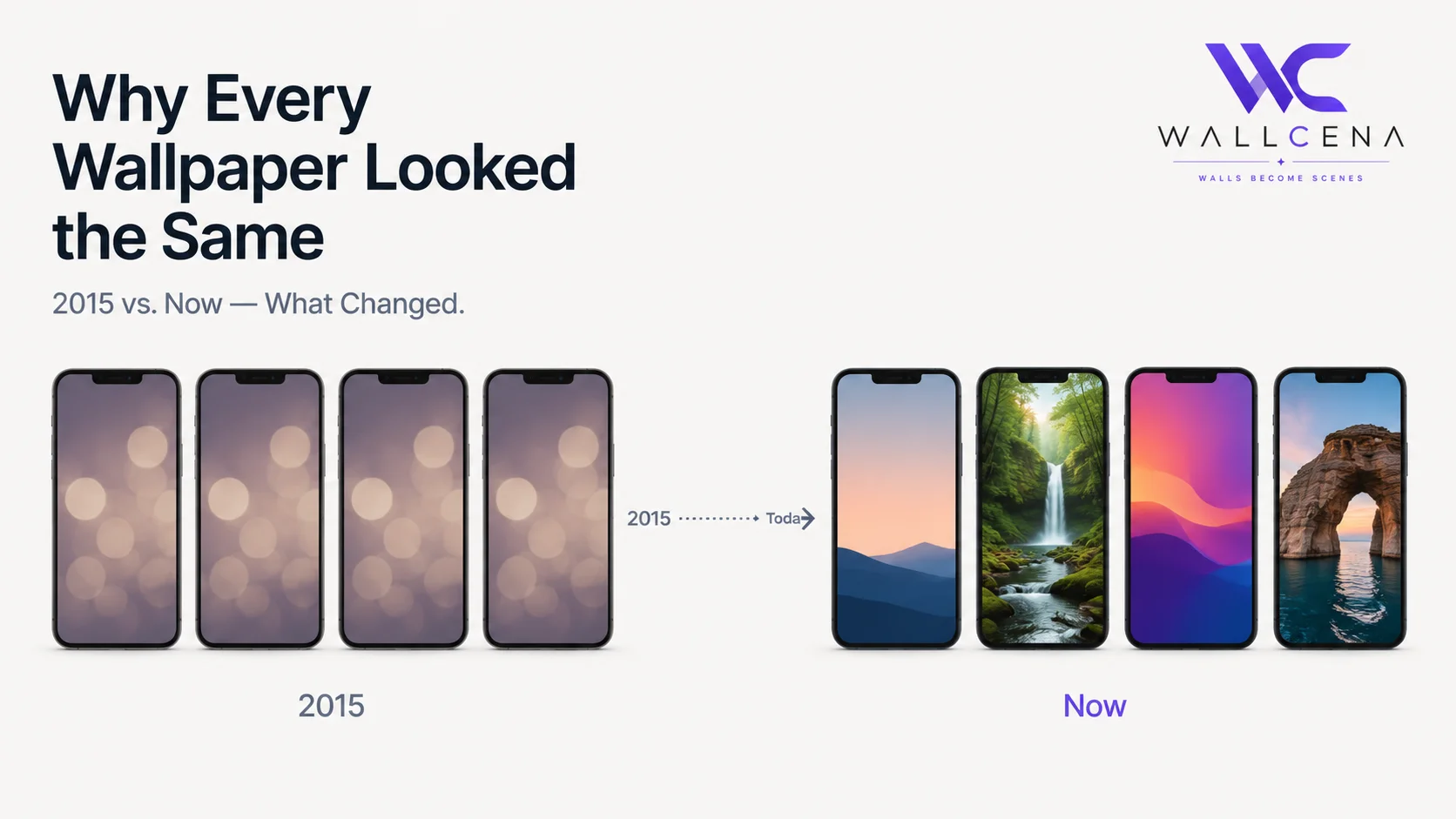
Scroll Back to 2015 and Everyone's Phone Looked... the Same
If you think back to phone screens from around a decade ago, a pattern emerges pretty quickly: blurred bokeh lights, default mountain ranges, factory-set abstract gradients. Not because everyone had identical taste, but because customization simply wasn't as easy, as visible, or as culturally "expected" as it is now. Wallpaper choice used to be an afterthought. Today, it's practically a form of self-expression. So what actually changed?
Reason 1: Default Wallpapers Were Genuinely Hard to Escape
In the mid-2010s, most phones shipped with a small handful of built-in wallpaper options, and browsing for alternatives meant actively searching the web, downloading files, and manually transferring them — an extra step most people simply skipped. Without an easy built-in way to discover new wallpapers, the path of least resistance was just keeping whatever came pre-installed, which is exactly why so many devices from that era looked visually identical out of the box.
Reason 2: Home Screen Customization Wasn't a "Thing" Yet
Widget-based, deeply personalized home screens — the kind where your wallpaper, icons, and layout are all coordinated together — became mainstream years later. Around 2015, most people treated their home screen purely as functional: icons in a grid, wallpaper in the background, nothing more. There wasn't yet a strong cultural push toward making your phone's screen feel like a personal aesthetic statement, so there was less motivation to seek out something different.
Reason 3: Social Media Hadn't Turned Phone Setups Into Content Yet
One of the biggest shifts since then has been social platforms turning "phone aesthetic" into shareable content. Home screen setup videos, matching icon packs, and wallpaper trends spreading through short-form video became a genuine content category — something that essentially didn't exist as a mainstream phenomenon in 2015. Once people started seeing curated, personalized setups shared publicly, it created a much stronger incentive to actually put thought into wallpaper choice instead of defaulting to whatever shipped with the device.
Reason 4: Discovery Got Dramatically Easier
Dedicated wallpaper apps and sites matured significantly, making it far easier to browse, preview, and download wallpapers matched to your exact device. What used to require searching image forums and hoping for a reasonably sized file became a smooth, instant process. Lowering the effort required to find something better than the default is a big reason personalization spread as quickly as it did.
Reason 5: Screens Themselves Got More "Wallpaper-Worthy"
Higher resolution displays, OLED panels with true blacks, and larger screen real estate all made wallpapers look genuinely more impressive than they used to. A detailed photo or a smooth gradient simply has more impact on a sharp, vivid modern display than it did on the lower-resolution screens common a decade ago — giving people more reason to actually care about the image sitting behind their icons.
What's Changed Most Since Then
- Wallpaper and icon matching became a mainstream aesthetic category, not a niche hobby
- Dynamic and time-based wallpapers became widely available natively on major platforms
- Wallpaper discovery shifted from generic search to dedicated, curated platforms
- Personalization became something people actively show off, rather than something private and unremarkable
Frequently Asked Questions
Why did so many phones look the same around 2015?
Limited built-in options, less cultural emphasis on personalization, and more effort required to find alternatives all contributed to widespread use of default wallpapers during that period.
What caused wallpaper personalization to become so popular?
A combination of social media making phone aesthetics shareable, easier wallpaper discovery through dedicated apps and sites, and higher-quality displays that made customization genuinely rewarding.
Are default wallpapers still common today?
Less so than before, though some people still prefer them, often simply because they don't prioritize customization rather than being unaware of alternatives.
Find Something That Doesn't Look Like 2015
If your wallpaper still feels like a factory default, browse our full wallpaper collection to find something that actually feels like yours.
Community
Comments (0)
Log in to like and comment.
No comments yet. Be the first to comment.